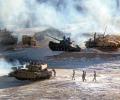
India's national security strategy needs to be revised periodically since the global and regional geopolitical situation is dynamic, points out Commodore Venugopal Menon (retd).

In the test, a space rocket boosted a hypersonic glide vehicle, one capable of carrying a nuclear device, which circled the globe before impacting.

'With two nuclear neighbours, how likely is it for our armed forces to battle in a contaminated environment that could include nuclear, biological or chemical attacks by the adversary?' 'Are we prepared for the threat?' Brigadier S K Chatterji (retd) explains the meaning and significance of Operation Vijay Prahar.
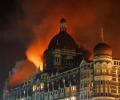
India would have responded differently to "Pakistan-sponsored" Mumbai terror attacks had there been a different "mix of people" at the helm, according to former foreign secretary and national security advisor Shivshankar Menon.

The strategic illiteracy on display in the arguments put forth on the Rafale deal before the Supreme Court is breathtaking, argues Colonel Anil A Athale (retd).

If Manmohan Singh was hobbled by allegations of sleaze and a stagnant economy, Modi faces the twin challenges of high unemployment and an uncertain and potentially volatile situation in Kashmir, points out Amulya Ganguli.

'In the absence of any further testing of nuclear warheads, it is essential to focus upon the associated structures of nuclear defence.'
"By 2022, we plan to have 160-plus ship navy, including three aircraft carriers, 60 major combatants, including submarines and close to 400 aircraft of different types. This will be a formidable three dimensional force with satellite surveillance and networking to provide force multiplication," Navy chief Admiral Sureesh Mehta said.
Pakistan has claimed that its policy of nuclear deterrence with India was working, but its atomic weapons were not meant for first use.
"India is a responsible nuclear power, and we will continue to work to prevent the proliferation of weapons of mass destruction," Singh said in his first address to the nation after becoming PM
'The general perspective -- certainly on Capitol Hill and Congress -- the love for India, the positive feeling for India still focuses on India as a democracy.' 'The more that Indian democracy and its pluralistic features is called into question by Indians, the more that same debate will replay back here.'

To persist with talks in the face of continuing terrorism that puts hundreds of Indian lives at stake is not only naive but morally repugnant and ethically unacceptable. It is time to see through this charade and abandon a path of high risk and no returns, says Vivek Gumaste.

'India should pledge that it will only target those provinces of Pakistan where nuclear weapons are located,' says Colonel Anil A Athale (retd).

The choice before the next government is not between being a soft State and a tough State; it is between being a smart State and a dumb State, says former foreign secretary Shyam Saran.

Rediff.com present a comprehensive listing of the nuclear nations and their collective and active stockpile.

Dhanteras, the prime minister said, has become even more special.
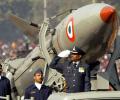
While we have to hiss loudly and do the lunging bit to keep our foes on their toes, that's only a tactical matter. What is the strategic goal? What is the end game? In my opinion, there is only one possible end game: the unwinding of Pakistan into several pieces: Balochistan, Sind, Balawaristan (Gilgit, Baltistan, the rest of PoK), the Pashtun area Khyber Pakhtunwa which will merge with Afghanistan, and the rump Punjab, says Rajeev Srinivasan.
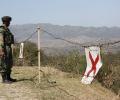
'The response to terror is not always reciprocal terror, nor is launching a conventional response the best response.' 'The best response is to make the sponsor pay a price he cannot afford,' says former RA&W chief Vikram Sood.

'Only when India's adversaries are convinced that India has both the necessary political and military will and the hardware to respond to a nuclear strike with punitive retaliation that will inflict unacceptable loss of human life and unprecedented material damage, will they be deterred,' says Brigadier Gurmeet Kanwal (retd).
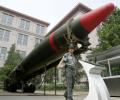
Despite four disarmament section talks and six strategic dialogues between the two foreign ministries, China's intransigence on recognising Indian nuclear status resulted in no confidence building measures in the nuclear field between the two, says Srikanth Kondapalli.

52 world leaders, including Narendra Modi, will attend this week's Nuclear Security Summit in Washington, DC. Obama will meet separately only with the Chinese president.
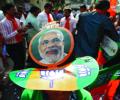
Retired senior US diplomats Teresita and Howard Schaffer believe the 'US cannot afford to continue restricting its contacts with Narendra Modi.' Rediff.com's Aziz Haniffa reports from Washington, DC.

'India must close the missile technology gap with both China and Pakistan as early as possible, or else the credibility of India's nuclear deterrence will remain suspect,' says Brigadier Gurmeet Kanwal (retd).

'It was India's good fortune to have a Vajpayee lead the government at this crucial moment in history.' 'By taking the N-decision he saved future generations of Indians from being 'Kosovoed' or 'Iraqed',' says Colonel Anil A Athale (retd).

Vajpayee had always felt that India must act with conviction and panache. He decided that, irrespective of the attendant risks, he would undertake what many felt was a precarious course. A fascinating excerpt from N K Singh's Portraits Of Power: Half A Century Of Being At Ringside on Atalji's 96th birthday, December 25.

'Modi's abject capitulation will play out badly in his core constituency.' 'The bulk of our strategic community is under the impression that India under Modi has already become a superpower.' 'They don't even want to look at the country's emaciated limbs or its asthmatic problems,' says Ambassador M K Bhadrakumar.
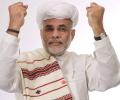
Two former senior United States diplomats, with more than 60 years experience in South Asia between them, have exhorted Washington to establish communication with Bharatiya Janata Party's prime ministerial candidate Narendra Modi sooner than later.
Serious question marks remain over how effectively, or whether at all, India can actually execute a disarming CF strike that takes out most of Pakistan's nukes, says Ajai Shukla.
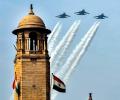
'No country can ever be free to make its choices and remain independent if it continues to wear borrowed plumes,' warn Lieutenant General Ashok Joshi (retd) and Colonel Anil A Athale (retd).
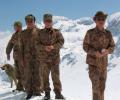
'The border standoff, if not properly addressed by both sides, could escalate to a conventional or sub-conventional conflict between India and China,' predicts Srikanth Kondapalli, one of India's leading China experts.

'While China expressed reservations on the Indian role in the South China Sea, Beijing threw to the winds Indian concerns on Kashmir by announcing $46 billion in investments Pakistan occupied Kashmir,' says Srikanth Kondapalli.
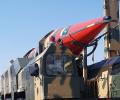
Pakistan will not delegate "advance authority" over nuclear weapons to military unit commanders even in the event of a crisis with India, according to a media report.

China's state media on Tuesday defended Pakistan's nuclear record, saying it was A Q Khan who was responsible for atomic proliferation which was not backed by the government and argued that any exemption to India for Nuclear Suppliers Group entry should also be given to Pakistan.

How to deal with a country that has made export of terror a reason to make the world notice and fund it? Rediff.com contributor Sanjeev Nayyar offers a few suggestions

'The only effective defence against a suicide attack is 'pre-emptive' destruction of the attacker,' says Colonel Anil A Athale (retd).

With the launch of the first indigenous aircraft today, India will join a club of nations like the United States, Russia, China, the United Kingdom and France that possess nuclear-powered submarines

'Diplomatic engagement will continue even as India keeps all its options open with respect to discretely targeting the Pakistani military and its terrorist proxies.'
